From Magnetars That Would Tear Your Atoms Apart To Stars That Sterilize Entire Galaxies — Space Is Trying To Kill You In Ways You Can’t Even Imagine.
Space is mostly empty. And that’s the good news.
The bad news? The parts that aren’t empty are some of the most violent environments in existence. We’re talking about objects so extreme they break physics. Radiation so intense it sterilizes entire star systems. Forces so brutal they would rip you apart molecule by molecule before you even noticed something was wrong.
Earth, by comparison, is a paradise. A small, blue, well-shielded paradise sitting in one of the calmer neighborhoods of a relatively quiet galaxy. We have an atmosphere. A magnetic field. A stable star.
And just on the other side of that thin layer of air, the universe is full of places that would kill you in spectacular ways. Here are nine of the worst.
1. The Vicinity Of A Supernova
When a massive star runs out of fuel, it doesn’t fade quietly. It explodes with the energy of billions of suns, briefly outshining its entire galaxy.
If you were anywhere near a supernova, you would be vaporized instantly. The shock wave alone moves at 10% the speed of light. The radiation output is enough to fry electronics from light-years away.
How close is too close? A supernova within about 50 light-years of Earth would destroy our ozone layer, trigger mass extinctions, and bathe the planet in deadly cosmic radiation for years. Within 25 light-years? Game over for most life.
The good news: there are no candidate stars close enough to be a real threat. Betelgeuse, which will eventually supernova, is over 500 light-years away. Far enough to be a spectacular sight, not far enough to be a danger.
2. The Path Of A Gamma-Ray Burst
Gamma-ray bursts are the most energetic events in the universe. In a few seconds, a single GRB releases more energy than the Sun will produce in its entire 10-billion-year lifespan.
The catch: that energy is focused into a narrow beam. If a gamma-ray burst goes off and the beam is pointed at you, you have a problem. If it’s pointed somewhere else, you’re fine.
A GRB within several thousand light-years, with its beam aimed at Earth, would destroy the ozone layer in seconds, trigger a global mass extinction, and dose the surface with enough radiation to kill anything caught in direct line of sight.
Some scientists think a gamma-ray burst may have caused one of Earth’s mass extinctions about 450 million years ago. We’re not entirely sure. But the math says it’s possible.
3. The Surface Of A Magnetar
A magnetar is a type of neutron star with the strongest magnetic fields in the universe — roughly a quadrillion times stronger than Earth’s magnetic field.
If you were within 1,000 kilometers of a magnetar, the magnetic field would distort the atoms in your body. Electron orbits would deform. Chemistry as you know it would stop working. You wouldn’t be torn apart — your atoms would simply cease to function in any recognizable way.
And we’re not just talking close-range danger. A magnetar magnetic flare detected in 2004 from SGR 1806-20, 50,000 light-years away, briefly affected Earth’s upper atmosphere. Fifty thousand light-years. That’s halfway across our galaxy.
There are only about 30 known magnetars in the Milky Way. Which is plenty.
4. The Center Of The Milky Way
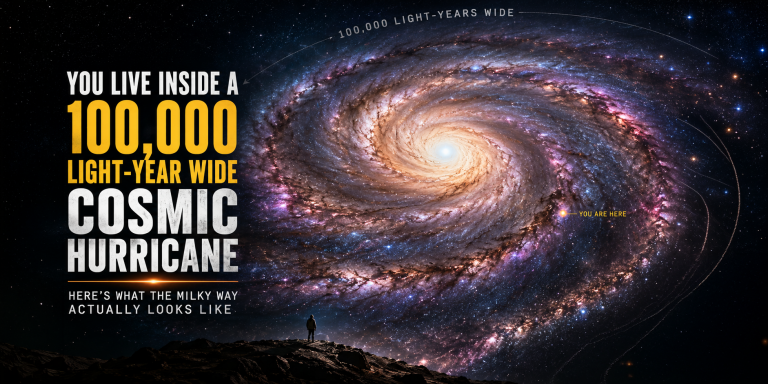
Sagittarius A* — the supermassive black hole at the heart of our galaxy — is currently quiet by cosmic standards. But the neighborhood around it is anything but.
Within a few light-years of the galactic center, stars are packed thousands of times more densely than they are in our region. They orbit Sagittarius A* at hundreds of kilometers per second, occasionally getting close enough to be torn apart by tidal forces.
Stellar collisions are rare elsewhere in the galaxy. Near the center, they happen. The intense radiation environment makes planet formation difficult, and the constant gravitational disruptions would yank any stable solar system apart over time.
Plus, Sagittarius A* occasionally has snacks. When it does, it produces brief but powerful radiation flares. Living there would mean constant exposure to high-energy emissions from a feeding black hole. Not ideal for biology.
5. The Surface Of Venus
You don’t have to leave the solar system to find hell. Venus is right next door.
Surface temperature: about 465 degrees Celsius. Hot enough to melt lead. Hotter than Mercury’s surface, despite Venus being twice as far from the Sun.
Atmospheric pressure: 92 times Earth’s. Equivalent to being almost a kilometer underwater. Any human stepping onto Venus would be simultaneously crushed, boiled, and dissolved by sulfuric acid rain.
The atmosphere is mostly carbon dioxide. The clouds are sulfuric acid. The wind speeds in the upper atmosphere reach 360 kilometers per hour. The Soviet Venera probes that landed there in the 1970s lasted between 23 minutes and two hours before being destroyed.
Venus is what happens when a runaway greenhouse effect goes nuclear. It’s also a useful reminder.
6. The Sun’s Corona
The Sun’s corona — its outer atmosphere — has temperatures of 1 to 3 million degrees Celsius. That’s hundreds of times hotter than the Sun’s actual surface.
Why is the corona so much hotter than the surface? Solar physicists are still arguing about it. The leading theory involves magnetic field interactions, but nobody has fully cracked it.
Either way, the corona is a hostile environment. Charged particles fly out from it at enormous speeds, creating the solar wind. Occasionally, the Sun ejects massive clouds of plasma called coronal mass ejections — billions of tons of charged particles racing through space at millions of kilometers per hour.
A direct hit from a major CME can damage satellites, knock out power grids, and dose astronauts with dangerous radiation. The 1859 Carrington Event — a massive solar storm — caused telegraph systems to spark fires across Europe and North America. A modern equivalent would cause trillions in damage.
7. The Atmosphere Of Jupiter
Jupiter looks beautiful. Its swirling bands and the Great Red Spot are some of the most iconic images in astronomy.
Up close, it’s a nightmare.
The atmosphere features winds reaching 600 kilometers per hour. The Great Red Spot is a storm twice the size of Earth that has been raging for at least 350 years. As you descend into the atmosphere, pressure increases catastrophically — by the time you reach Jupiter’s metallic hydrogen layer, the pressure exceeds 3 million times Earth’s atmospheric pressure.
And then there’s the radiation. Jupiter’s magnetic field is the strongest of any planet in the solar system. It traps charged particles in radiation belts so intense that NASA spacecraft have to be specifically hardened against them. A human passing through Jupiter’s radiation environment would receive a fatal dose in minutes.
8. Inside A Black Hole
Once you cross the event horizon, there’s no path back. Every possible direction leads further in. Every possible future ends at the singularity.
For a stellar-mass black hole, you’d be torn apart by tidal forces before even reaching the event horizon — gravity at your feet would be so much stronger than gravity at your head that your body would be stretched into a thin stream of particles. Astronomers actually call this spaghettification. It’s the technical term.
For a supermassive black hole, the tidal forces are weaker at the horizon, so you could cross intact. But your fate is sealed the moment you do. Time and space rearrange themselves so that the singularity lies in your future, not in a particular direction. You can’t avoid it any more than you can avoid tomorrow.
And nothing — not light, not information, not your final scream — ever comes back out.
9. An Active Galactic Nucleus
Some galaxies have central black holes that are actively feeding — pulling in enormous amounts of matter that heats to extreme temperatures and emits radiation across the entire electromagnetic spectrum.
These are called active galactic nuclei, or quasars when the energy output is extreme. The brightest quasars outshine entire galaxies. Some emit jets of charged particles thousands of light-years long, traveling at nearly the speed of light.
Anything within a few hundred light-years of an active quasar is being sterilized continuously. The radiation environment is hostile to complex chemistry, let alone life. If our galaxy’s central black hole ever switches back on at full intensity, large portions of the Milky Way could become uninhabitable.
Fortunately, Sagittarius A* is quiet. Has been for a while. We hope it stays that way.
Why Earth Is The Exception, Not The Rule
Step back and look at where we live. We orbit a stable, middle-aged star. We’re in a quiet region of the galaxy, far from the chaos of the center. Our planet has a strong magnetic field that deflects most of the harmful solar radiation. We have an atmosphere thick enough to burn up incoming meteors and absorb dangerous UV radiation.
We have liquid water. We have moderate temperatures. We have plate tectonics that recycle nutrients. We have a large Moon that stabilizes our axial tilt and gives us predictable seasons.
None of this is normal. Every one of these features is rare in the cosmic sense. Most of the universe is either too hot, too cold, too radioactive, too dense, or too violent to host anything more complex than gas clouds.
Earth isn’t just a nice place to live. It’s one of the few places in the observable universe where life as we know it could possibly exist.
So next time someone complains about the weather, gently remind them: at least we’re not on Venus. Or near a magnetar. Or anywhere else in the universe, really.
Sources
NASA Science – Solar System and Beyond – https://science.nasa.gov
European Southern Observatory – https://www.eso.org
NASA Goddard – Magnetars and Neutron Stars – https://imagine.gsfc.nasa.gov
Soviet Venera Program – Venus Surface Data
NASA Living With a Star – Solar Storms and Space Weather