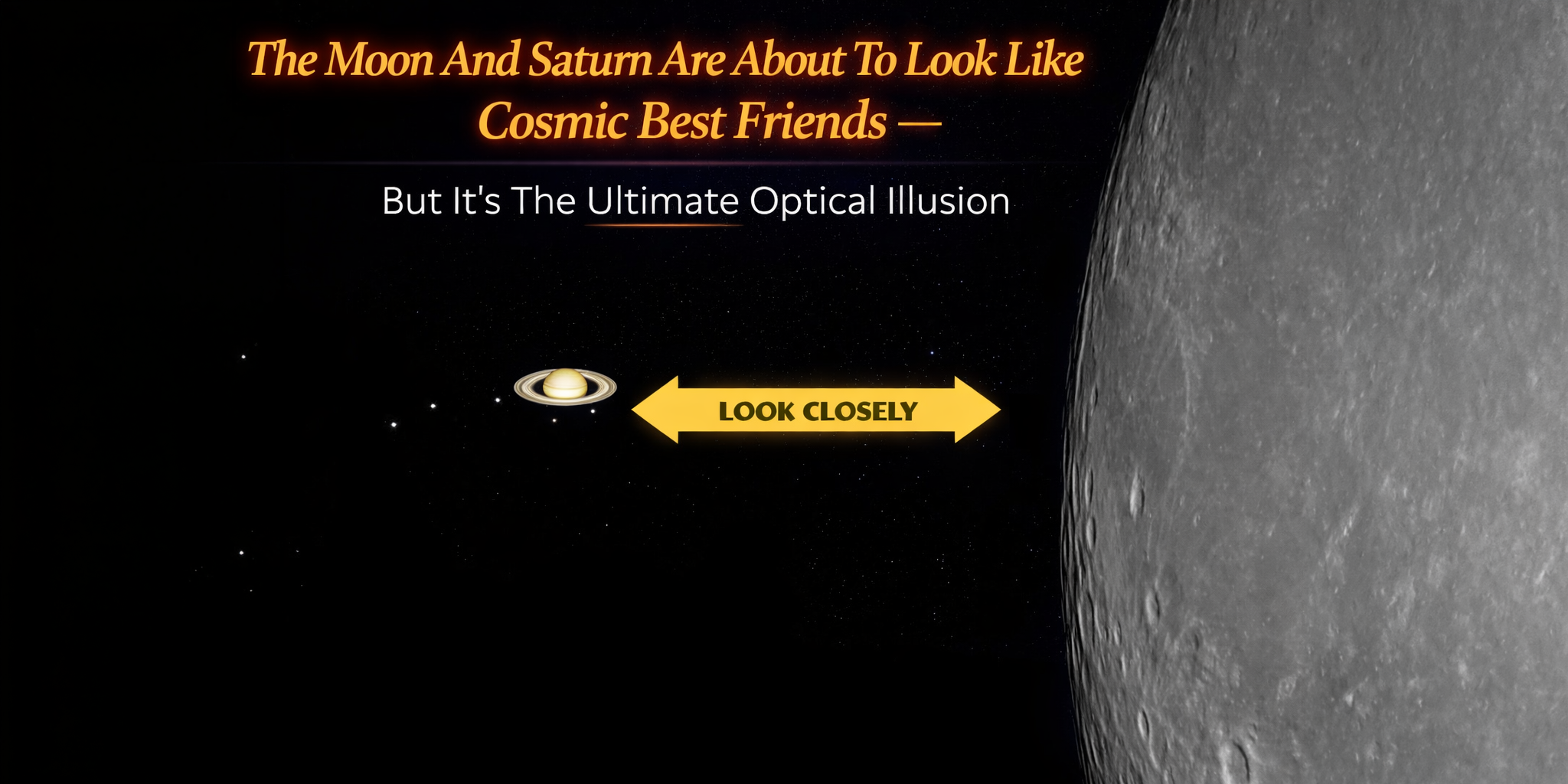
On September 27, 2026, the sky is going to mess with your sense of reality. In the best way possible. Picture this: You look up at the night sky and see the Moon. Right next to it, so close they look like neighbors, is Saturn. Cute, right? Two celestial bodies hanging out. Friendship goals.
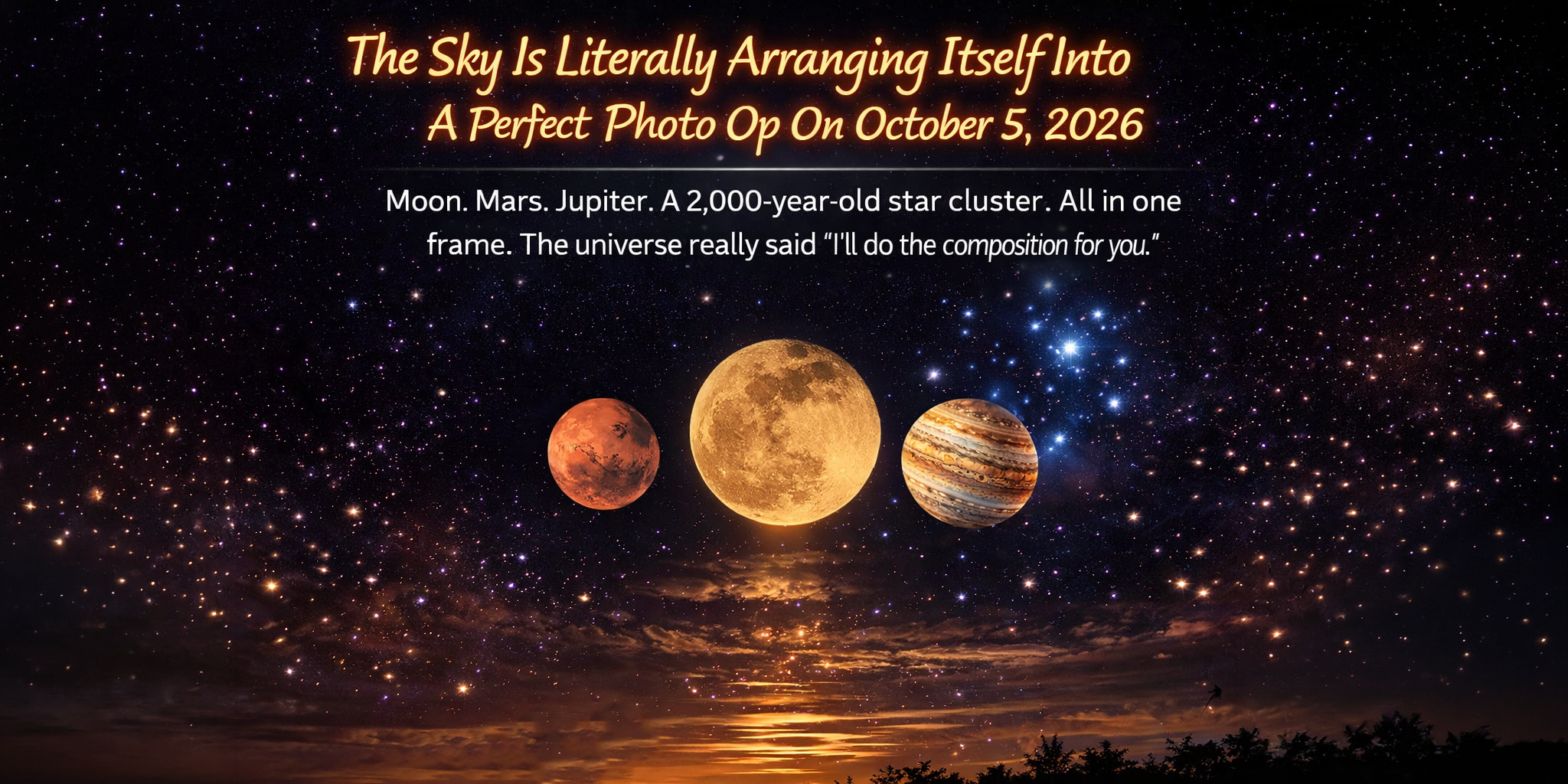
Moon. Mars. Jupiter. A 2,000-year-old star cluster. All in one frame. The universe really said 'I'll do the composition for you.' Some nights, the sky looks like a mess of random dots. And then there are nights where it looks like someone opened Photoshop, dragged four celestial objects into frame, and hit 'align to grid.'
The Draconids are the underdog of meteor showers. Low expectations. Occasional chaos. No staying up until 3 AM required. Let's be brutally honest. If someone says "meteor shower with about five meteors per hour," your reaction is probably: "Cool. I'll skip it."
The Leonids have a REPUTATION. 2026 might be chill, but the physics that caused the 1833 sky apocalypse is still very much there. Let's talk about reputation. The Leonids don't have one because of what they usually do. They have one because of what they've DONE. And what they've done is absolutely unhinged.
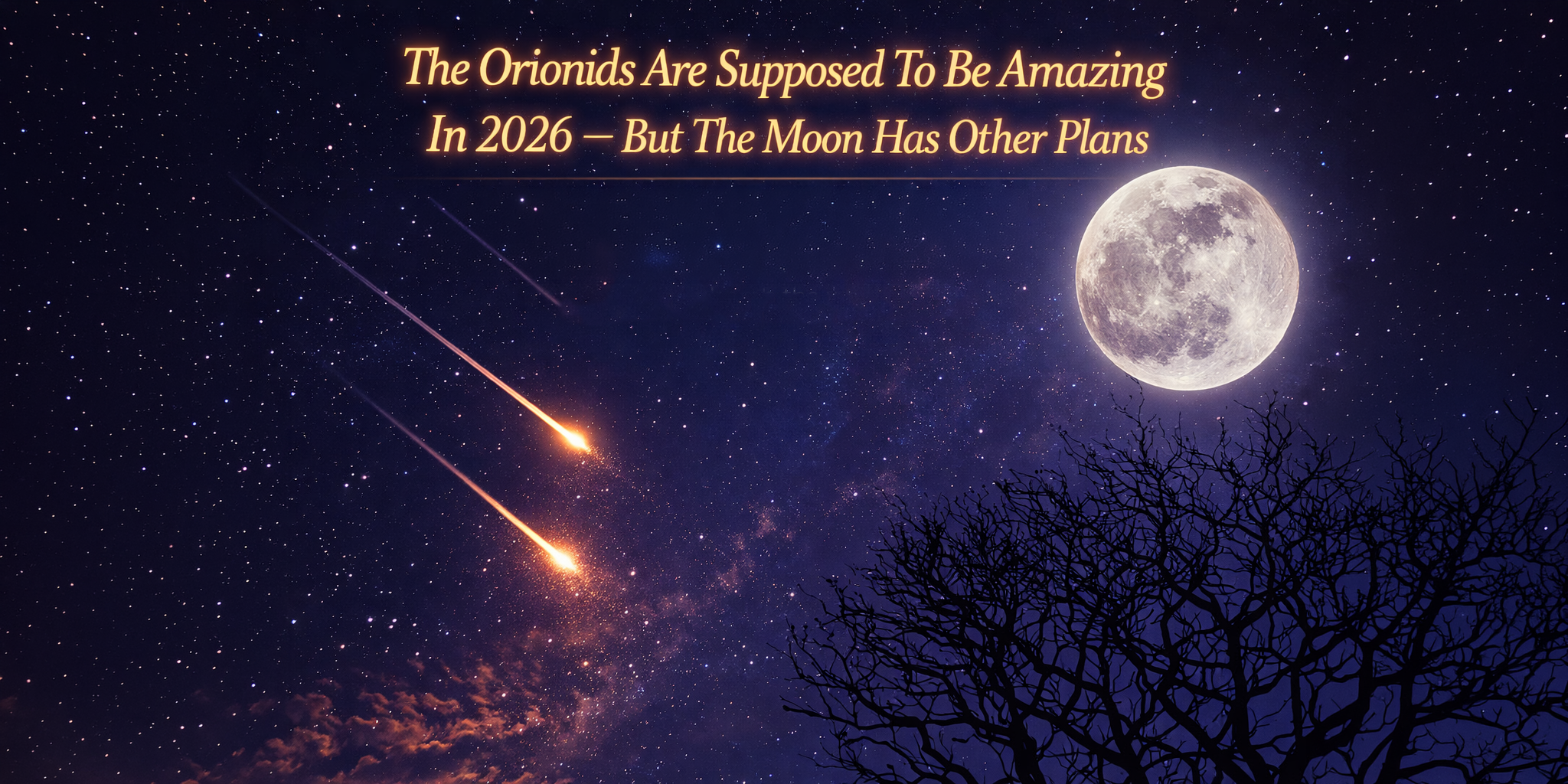
Halley's Comet debris, 66 km/s entry speeds, gorgeous trails. Too bad a nearly full Moon is about to photobomb the whole thing. Let's start with what SHOULD happen. The Orionids are objectively good. Around 15 meteors per hour. Fast streaks. Long, glowing trails. A direct connection to Halley's Comet — arguably the most famous comet in human history.
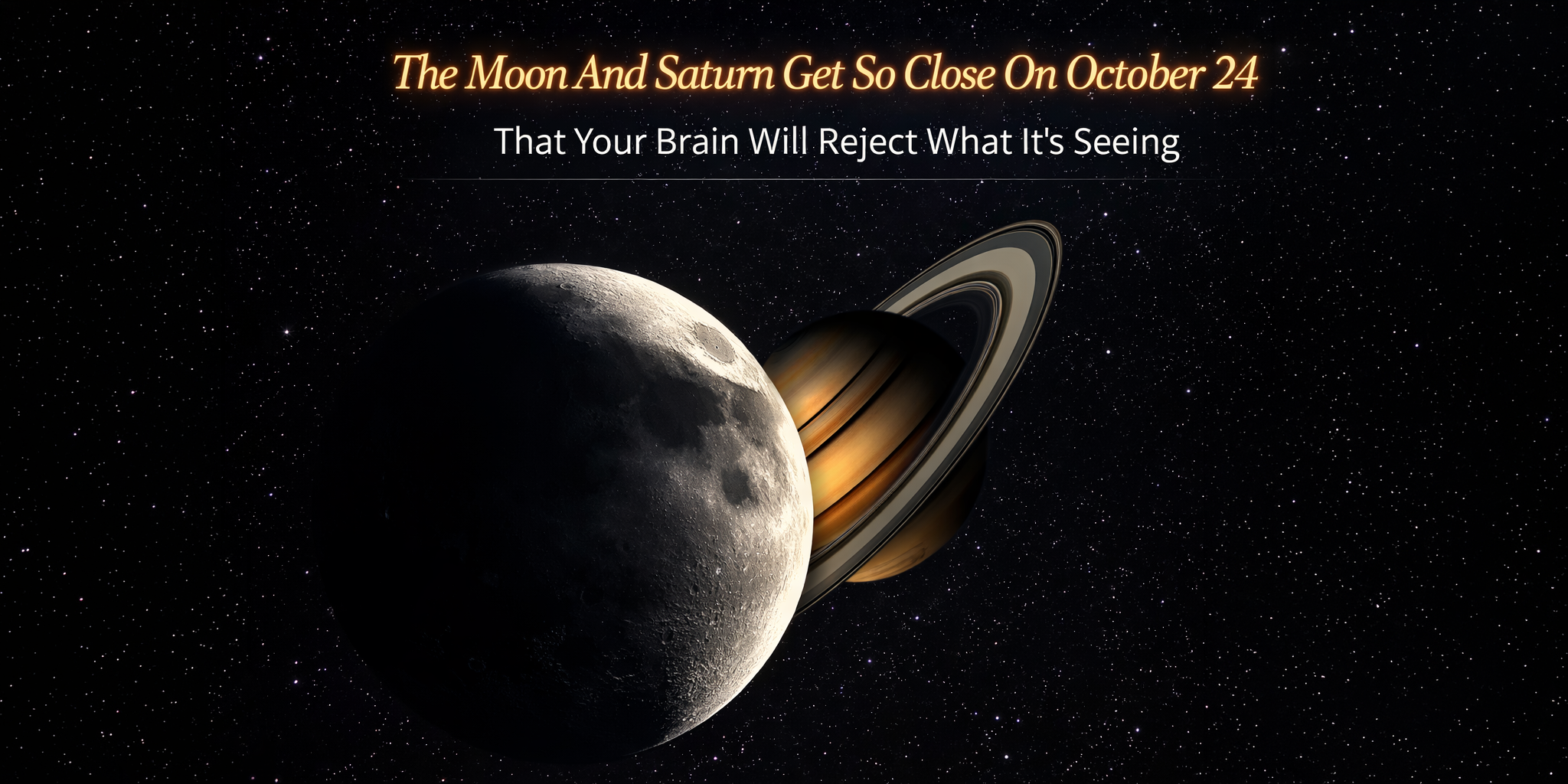
Less than one degree apart. Over a billion kilometers of actual distance. Your visual cortex is about to have a meltdown. You're going to look up and think something's wrong. Not in an apocalyptic, end-times way. More like that subtle feeling when your brain registers something that doesn't fit the pattern it expected.